Abernethy – The largest remnant of the ancient Caledonian Forest
Nethybridge, the Highlands
Abernethy Forest, in the northeast of Cairngorm National Park, is one of the last fragments of the Caledonian Forest that once covered much of Scotland. Spanning over 4,000 hectares, it has a rich biodiversity and timeless atmosphere. Just under half of the trees are Scots pine, with some specimens dating back several centuries. Other species include silver birch, rowan and juniper, and there are pockets of bog woodland in the lower lying areas. The forest is home to two nesting Osprey, and over 70 species of birds including the capercaillie, Eurasian goshawk and golden eagle.

Glen Affric – The most beautiful glen in Scotland
Crannich, the Highlands
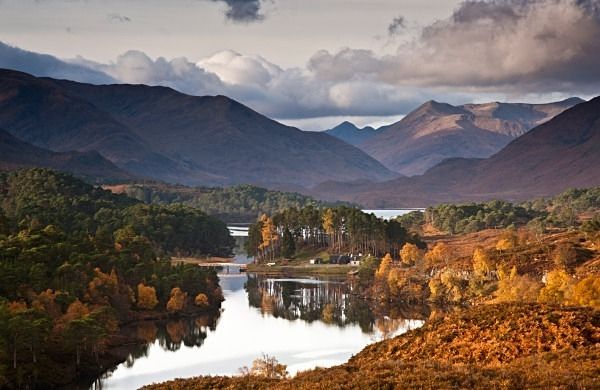
Sir Edwin Landseer set his painting The Monarch of the Glen in Glen Affric, and this glacial valley is a classic highland landscape. Covering 30,000 acres, it’s famous for its crystal-clear lochs and dense woodlands. Among the trees are Scots pine, silver birch, rowan and juniper. Red deer graze on the hillsides, while pine martens and red squirrels navigate the canopy.
Argyll Forest Park – A fairy tale world
Cowal Peninsula, Argyll and Bute
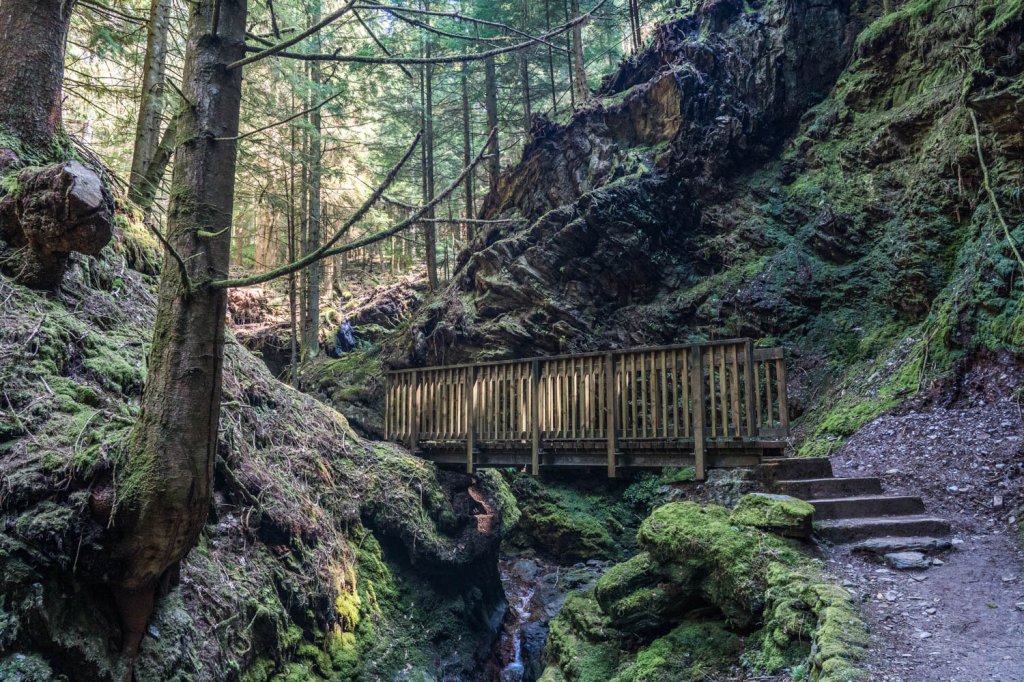
Within Argyll Forest Park, in the west of Scotland, are two unique sites: Puck’s Glen and Kilmun Arboretum. Puck’s Glen is an eerie woodland walk, created between 1870 and 1889 by Greenock sugar refiner James Duncan who wanted it to be reminiscent of A Midsummer Night’s Dream. The result is a magical world of moss-covered rocks, towering Douglas firs cascading waterfalls, and whimsical flora. On the nearby shores of the Holy Loch, Kilmun Arboretum is a Victorian collection of tree from around the world, including exotic conifers, ornamental maples, Japanese cedars and Himalayan spruces.

The Wood of Cree – A sea of bluebells
Galloway Forest Park, Dumfriesshire
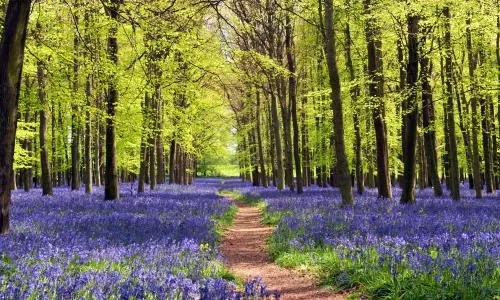
The Wood of Cree, which is thought to date back over 5,000 years to the last ice age, is a woodland sanctuary of 1,200 hectares, making it the largest ancient wood in southern Scotland. The forest is primarily composed of native broadleaf species, including oak, birch and rowan. In spring, a magical transformation happens as bluebells wash over the forest floor with a sea of ephemeral blue.
Taynish – A temperate rainforest
Taynish National Nature Reserve, Argyll
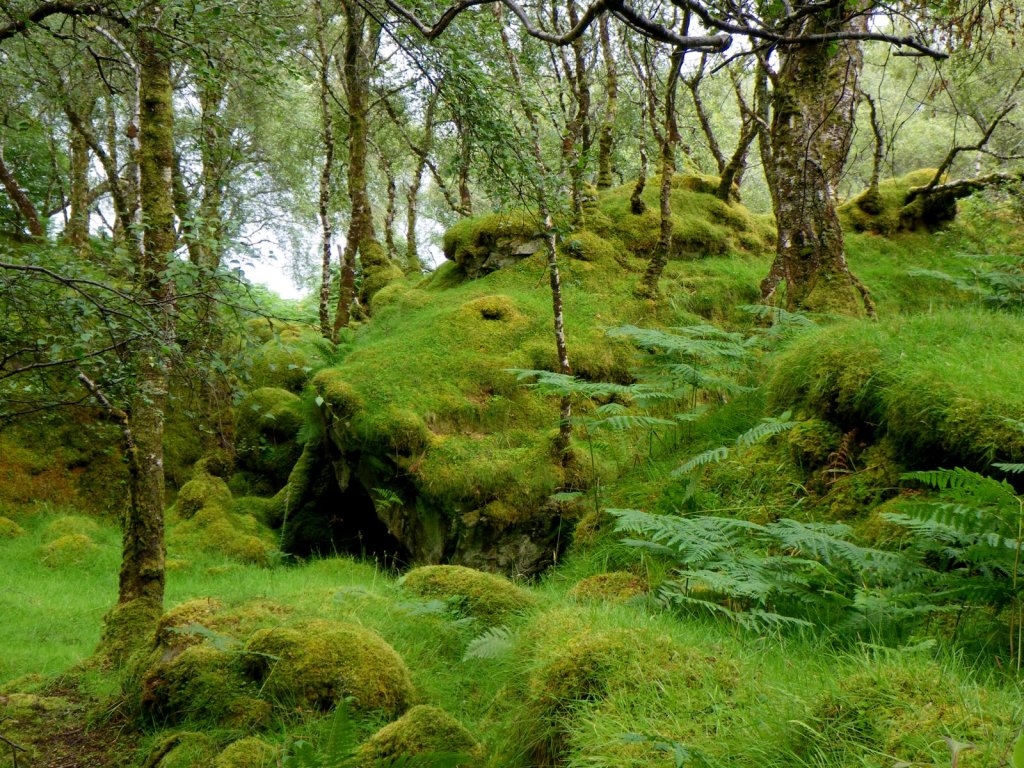
In the southwest of Scotland, Taynish is an ecologically significant temperate rainforest. It covers almost all of the Taynish peninsula, which is 5km long and 1km wide. Taynish’s rainforest ecosystem has evolved in response to the local temperate climate, and the forest has a mix of ancient sessile oak, birch, alder, ash and hazel. The abundant plant life, including ferns, mosses, liverworts, and lichens contribute to the unique microclimates within the rainforest, fostering a delicate balance that supports its biodiversity.
Craigvinean Forest – Big Tree Country
Tay Forest Park, Perthshire
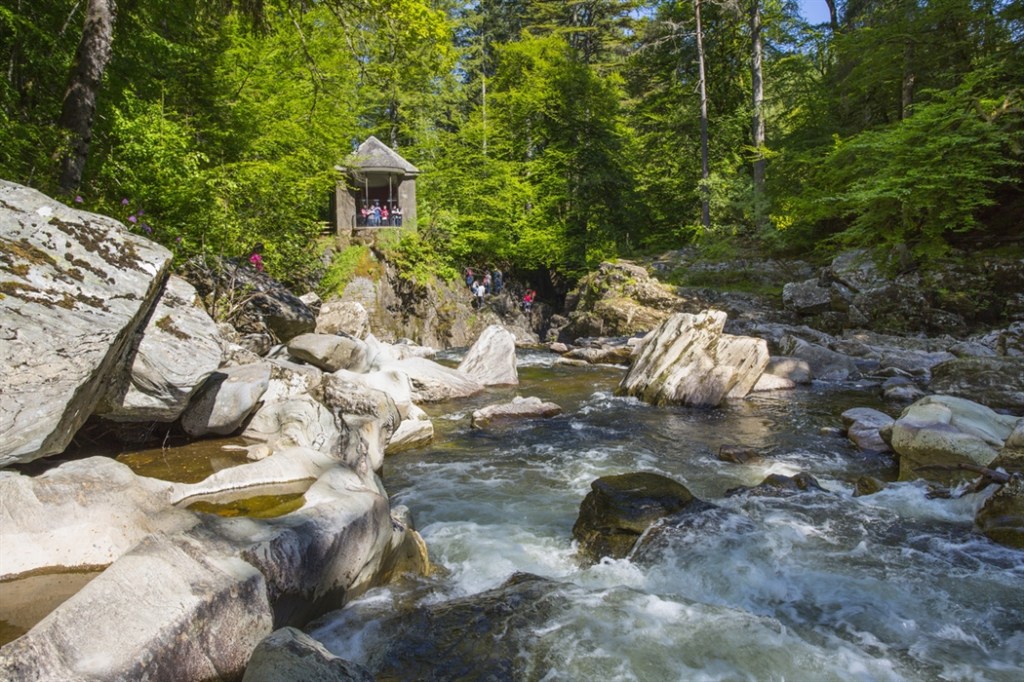
Perthshire is known as Big Tree Country partly due to the seed collector, David Douglas, who travelled the world and brought back new tree species to Scotland, including the giant Douglas fir. Craigvinean is one of Scotland’s oldest managed forests and is composed of Scots pine, oak, beech, and Douglas fir. Within Craigvinean, is the Hermitage – a historic site featuring giant Douglas firs which create a cathedral-like canopy over the trails. It’s home to Ossian’s Hall, a folly in memory of a blind Celtic bard living in the third century. The hall is full of mirrors reflecting views of the waterfall and was described by Willian Wordsworth as a “World of Wonder”.
 Diana McPartlin